Waffle Romper Guide: Best Picks for Baby in 2026
Table of Contents
- Why a Waffle Romper Belongs in Every Baby's Wardrobe
- Waffle Knit Baby Clothes: What Makes the Fabric Different
- How to Choose the Right Waffle Romper: Fit, Features, and Sizing
- How to Wash Waffle Knit Fabric So It Lasts
- Styling Baby Rompers for Photoshoots and Everyday Wear
- Seasonal Picks: Waffle Rompers for Summer, Winter, and In-Between
- Frequently Asked Questions
Last Updated: September 29, 2026
Why a Waffle Romper Belongs in Every Baby's Wardrobe
A waffle romper is a one-piece baby outfit made from textured waffle knit fabric, prized for its breathability, softness, and relaxed fit. This guide breaks down what makes the fabric different, how to choose the right size, and how to care for each piece so it lasts through multiple children.
The waffle romper has quietly become the workhorse of a well-curated baby wardrobe. It photographs beautifully, moves with a crawling or toddling baby, and layers under cardigans without bulk. Parents who invest in a few quality pieces tend to reach for them first, week after week.
Here's what most guides get wrong: they treat a waffle romper as a seasonal novelty rather than a year-round staple. The textured weave regulates temperature in both directions, which means the same piece works for summer wear and winter layering.
Below, we'll cover fabric composition, sizing, washing, styling, and seasonal picks so you can build a rotation that actually gets worn.
Waffle Knit Baby Clothes: What Makes the Fabric Different
Waffle knit baby clothes use a woven grid pattern that traps tiny pockets of air, giving the fabric its signature texture and its temperature-regulating quality. That structure is why waffle knit feels cozy without feeling heavy.
The raised squares also make the fabric more absorbent and more forgiving of spit-up and spills than a flat jersey knit. A common mistake is assuming all waffle knits are identical. They are not. Looser weaves feel airier and drape more; tighter weaves hold shape longer and resist pilling better.
For babies with sensitive skin, the raised texture can actually reduce the surface contact a flat fabric would create, which many parents find gentler during active play.
Cotton Blends, Stretch, and Skin-Friendly Comfort
Most quality waffle rompers use a cotton blend rather than 100% cotton. Adding a small amount of polyester improves durability, while a touch of elastane provides the stretch needed for a one-piece to move with a baby rather than against them.
A typical blend might run roughly 95% cotton with 5% elastane, though ratios vary by maker. What matters more than the exact split is how the fabric feels after the first wash. Skin-friendly waffle knits stay soft-touch and don't stiffen, which is the clearest sign of a good blend.
Look for a soft-touch finish and flat seams at the neckline and inseam.
What the Fiber Actually Is: Organic Cotton, Recycled Polyester, and Bamboo
The single biggest variable in a waffle romper is not the weave, it is the fiber. Two rompers can look identical on a hanger and behave completely differently after ten washes depending on what they are made of. Here is how the common options compare.
- Organic cotton: Grown without synthetic pesticides and certified under standards like GOTS (Global Organic Textile Standard). It breathes well, holds up to repeated washing, and is the safest default for babies with eczema or very reactive skin. It is also the most expensive fiber on this list, which is why it usually appears in heirloom-priced rompers rather than budget multipacks.
- Conventional cotton: The same plant, grown with standard agricultural inputs. Softer on price, similar in feel, but with a heavier environmental footprint and no certification to verify how it was processed.
- Recycled polyester (rPET): Made from post-consumer plastic bottles. It adds durability and helps a romper keep its shape, and it is often blended with cotton to reduce cost. The trade-off is breathability, polyester traps heat, so a high-poly blend can feel clammy on a warm day even though the waffle structure still looks airy.
- Bamboo viscose or lyocell: Extremely soft and naturally moisture-wicking, which makes it a strong pick for summer. It is also the least durable of the group; bamboo blends tend to pill and lose structure faster than cotton, so they work best for a single season rather than a hand-me-down.
How to Read a Care Label Before You Buy
Fiber content on a tag is listed in descending order by weight, so the first fiber named is the dominant one. A label that reads "60% cotton, 35% polyester, 5% elastane" tells you the romper will be more durable and less breathable than a "95% cotton, 5% elastane" version. Neither is wrong, they simply serve different seasons and budgets.
How to Choose the Right Waffle Romper: Fit, Features, and Sizing
The right waffle romper fits snugly at the shoulders and chest but leaves room through the rise and inseam for a diaper and free movement. A relaxed fit through the body is intentional, not a sign of the wrong size.
- Newborn to 0-3 months: Prioritize button placket access for easy changes over long-term fit.
- 3-6 months: Check the inseam and rise, since this is when leg length starts to matter.
- 6-12 months: Look for stretch at the shoulders for pulling over the head.
- 12-24 months: Confirm the snaps or buttons hold up to repeated use.
One-Piece vs. Bodysuit Styles and What to Look For
A one-piece romper covers the torso and legs as a single garment, while a bodysuit snaps at the crotch and leaves the legs bare. Each has a place, and knowing which you need depends on the season and the occasion.
Features worth checking before you buy:
- Button placket: Makes dressing a wriggling baby far easier.
- Snap closures: Look for reinforced snaps that don't loosen after repeated washing.
- Collared neckline: Adds a polished look for photos without restricting movement.
- Whipstitching or embroidery: Small finishing details that signal heirloom-quality construction.
How to Wash Waffle Knit Fabric So It Lasts
Washing waffle knit fabric correctly comes down to three things: cold water, a gentle cycle, and air drying. Get those right and the texture holds up wash after wash.
Here's the routine that protects the weave:
- Turn the romper inside out before washing to shield the textured surface from friction.
- Use cold water on a gentle or delicate cycle to prevent shrinkage and pilling.
- Choose a mild, fragrance-free detergent to protect skin-friendly finishes.
- Skip fabric softener, which coats the fibers and flattens the waffle texture over time.
- Air dry flat or line dry whenever possible. If you must use a dryer, choose low heat.
- Reshape while damp to help the piece hold its silhouette.
Styling Baby Rompers for Photoshoots and Everyday Wear
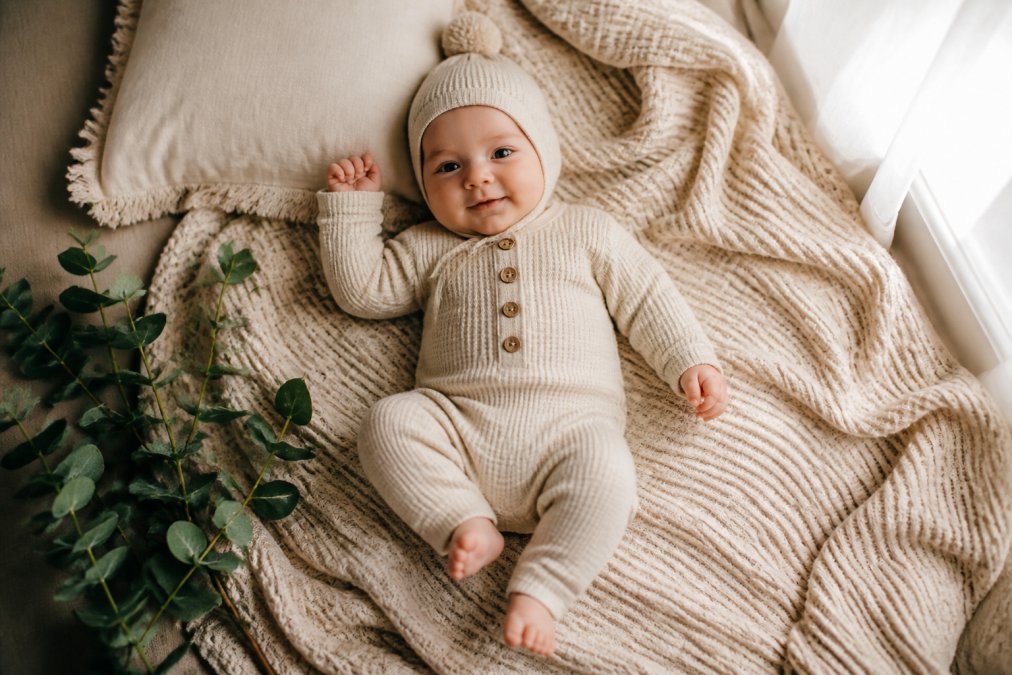
Styling baby rompers for photoshoots works best when you keep the palette simple and let the waffle texture be the focal point. Neutral tones, natural light, and one or two complementary accessories outperform busy, layered looks.
Seasonal Picks: Waffle Rompers for Summer, Winter, and In-Between
Seasonal selection comes down to sleeve length and fabric weight. A sleeveless or short-sleeve waffle romper handles summer; a long-sleeve version layers through winter.
| Season | Best Style | Fabric Weight | Layers With |
|---|---|---|---|
| Summer | Sleeveless bodysuit | Light weave | Sun hat, sandals |
| Spring/Fall | Short or long sleeve | Medium weave | Cardigan, knit hat |
| Winter | Long-sleeve one-piece | Denser weave | Sweater, booties |
How to Layer a Waffle Romper for Every Season
Most product pages stop at the table above. The real value is in knowing how to build the layers around the romper, because the same piece can carry a baby from a 45-degree morning to a 70-degree afternoon with two small additions.
Building a Three-Piece Capsule
- One light-weave sleeveless or short-sleeve bodysuit for summer and warm indoor days.
- One medium-weight short or long-sleeve one-piece for spring and fall, layered with a cardigan or tights as needed.
- One denser long-sleeve one-piece for winter, worn as a base under a sweater.
Stick to a single neutral palette, cream, oatmeal, sage, or a soft grey, so all three pieces mix with the same cardigans, hats, and tights.
A waffle romper is a year-round staple, not a seasonal one. Buy one lighter weave for summer and one denser long-sleeve version for winter, and add tights and a cardigan for the in-between months.
Frequently Asked Questions
What does the term waffle clothes mean?
Waffle clothes refers to garments made from waffle knit fabric, which has a textured, grid-like surface similar to a waffle. The weave creates small pockets that trap air, making the fabric breathable and cozy at the same time. For a baby waffle romper, this means a piece that keeps little ones warm without overheating, and the textured surface adds visual interest that plain cotton lacks.
Is waffle fabric good for winter?
Yes. Waffle knit traps air in its grid structure, which adds warmth without heavy bulk. A long-sleeve waffle romper works well as a layering piece in cooler months, worn over a bodysuit or under a cardigan. For summer, a sleeveless or short-sleeve version in a lighter cotton blend keeps babies comfortable. The key is choosing the right weight and sleeve length for the season.
How do you style a waffle romper for different seasons?
In summer, pair a sleeveless waffle romper with a sun hat and lace ruffle socks for a light, breathable look. For spring and fall, add a cardigan and knit booties. In winter, layer a long-sleeve waffle romper over a bodysuit and under a coat. Neutral tones like cream, oat, and sage work year-round and photograph well for social media sharing.
What are the benefits of waffle knit fabric for infants?
Waffle knit is breathable, soft against skin, and holds its shape well after washing. The textured weave allows airflow, which helps regulate a baby's temperature during active play and naps. It also has a soft-touch feel that parents love for sensitive skin. A waffle romper in a cotton blend with a bit of stretch moves with your baby and holds up through multiple wears and washes.