Heirloom Baby Clothes Near Me: 2026 Buying & Care Guide
Table of Contents
- What Counts as Heirloom Baby Clothes (And What Doesn't)
- Where to Find Heirloom Baby Clothes Near Me: Local and Online Options
- Sizing and Fit Accuracy: Getting Newborn to Tween Right the First Time
- Best Baby Clothing for Special Occasions: Occasion-Specific Outfits
- Smocked Baby Outfits for Photoshoots: Portrait-Ready Styling
- How to Care for Heirloom Baby Clothes So They Last Through Siblings
- Fabric Sustainability and Sourcing: What to Ask Before You Buy
- Frequently Asked Questions
Last Updated: October 2, 2026
What Counts as Heirloom Baby Clothes (And What Doesn't)
Heirloom baby clothes are garments built to survive years of wear and washing, then get passed down to the next child. The difference between heirloom-quality and ordinary baby clothing comes down to fabric weight, seam construction, and finishing details, not a price tag. At Tatum & Reese, we hear from parents who want pieces their second and third babies can wear, and that goal starts with knowing what to look for.
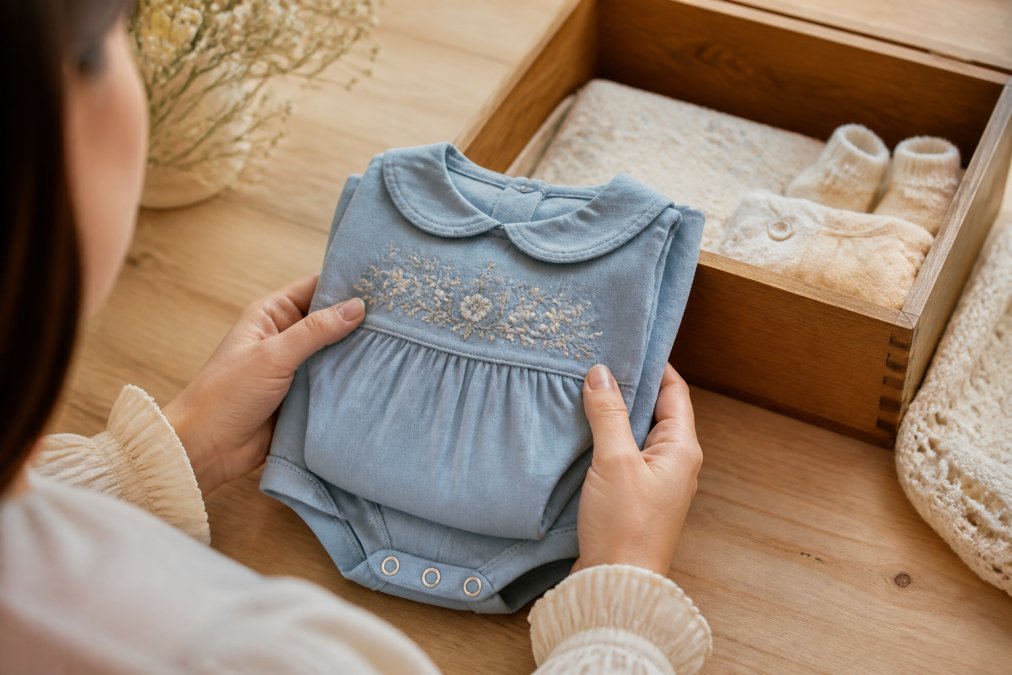
Fabric, Construction, and the Details That Decide Longevity
Heirloom-quality baby clothing is defined by three things: dense, fine-gauge fabric, reinforced seams, and hand-finished details that hold their shape after repeated washing. A common mistake is assuming "boutique" means "durable." It doesn't. Plenty of delicate-fabric pieces look precious in photos and fall apart by the third wash.
- Fine-gauge knit or tightly woven cotton-blend fabric that resists pilling
- Reinforced seams at stress points like shoulders and leg openings
- Snap closures set into reinforced fabric, not punched through single-layer material
- Hand-stitched or hand-embroidered detailing that won't unravel
- Pre-washed or pre-shrunk fabric to reduce surprise shrinkage
Where to Find Heirloom Baby Clothes Near Me: Local and Online Options
Searching for heirloom baby clothes near me usually turns up two choices: local boutiques and online specialty shops. Each has real trade-offs, and the right pick depends on whether you want to feel the fabric first or want a wider size range than a single store can stock. What most guides skip is how to actually evaluate a local source for heirloom quality and how to preserve what you find, which is the difference between a garment that lasts one baby and one that lasts three.
How to Vet Local Boutiques and Consignment Shops
Local boutiques let you inspect construction in person, which matters when you're judging fabric weight and seam quality. The drawback is limited inventory. A small shop may carry only a handful of newborn and 0-3 month pieces, and restocks can take weeks. Consignment and vintage shops can surface one-of-a-kind smocked or hand-embroidered pieces, but quality is inconsistent and you need to know what to look for.
Use this in-person checklist before you buy:
- Turn the garment inside out and check for cleanly finished interior seams, not raw edges or loose threads
- Feel the fabric weight: heirloom-quality cotton blends feel dense and fine-gauge, not thin or slick
- Check stress points at shoulders, leg openings, and snaps for reinforced stitching
- Look for hand-stitched or hand-embroidered details that won't unravel after a wash
- Ask whether the piece was pre-washed or pre-shrunk to reduce surprise shrinkage
Online Specialty Shops and What to Verify
Online specialty retailers solve the size and variety problem. You can compare fabrics, read sizing charts, and order multiple sizes at once. The trade-off is that you're judging quality from photos and descriptions. To reduce risk, look for a clear return policy, detailed fabric specs, and interior seam photos if available. If a shop can't tell you the fiber content or how the piece is finished, treat the heirloom label with caution.
| Option | Best For | Watch Out For |
|---|---|---|
| Local boutique | Feeling fabric before buying | Limited sizes, slow restocks |
| Online specialty shop | Full size range, variety | Can't touch fabric first |
| Consignment or vintage | One-of-a-kind finds | Inconsistent quality, wear |
Preserving What You Find, Wherever You Buy It
Once you've found a piece, the heirloom status depends on care. Hand-me-downs survive multiple children when they are washed cold on a gentle cycle, dried low or laid flat, and stored clean and flat with acid-free tissue in a breathable box. Avoid plastic bins that trap moisture, and treat stains immediately with a gentle detergent rather than scrubbing.
Sizing and Fit Accuracy: Getting Newborn to Tween Right the First Time
Sizing is where most heirloom purchases go wrong. Baby sizes vary widely between brands, and a "3 month" label from one maker can fit like a "6 month" from another. Buying the wrong size wastes money on a garment your baby outgrows before wearing it twice.
Best Baby Clothing for Special Occasions: Occasion-Specific Outfits
The best baby clothing for special occasions balances portrait-ready looks with comfort your baby can tolerate for a full event. A christening, first birthday, or family photo session lasts hours, and a fussy baby in scratchy fabric ruins the day faster than any outfit choice. Most guides stop at a list of occasions. The deeper move is to style heirloom pieces for specific milestones and then preserve them afterward, which is what turns a single-event outfit into a keepsake.
Styling Heirloom Pieces for Milestones
Start with the occasion, then work backward to fabric and fit:
- Christenings and religious ceremonies: traditional white or ivory, often with smocked or hand-embroidered detailing. Choose a soft cotton-blend underlayer to prevent scratchiness against sensitive skin, and test the full outfit at home a day before.
- First birthdays: a statement piece like a bubble or romper that photographs well and allows movement. Avoid stiff collars and heavy trim that restrict crawling or sitting.
- Family portraits: coordinated but not identical outfits, with soft neutral or seasonal tones. A shared color story or single detail like eyelet trim reads as intentional without looking costume-like.
- Holiday gatherings: layers you can remove as the room warms up. A lightweight romper with a removable cardigan works better than a single heavy piece.
Coordinating Sibling Sets and Mama-and-Me Pairings
Coordinating sibling sets and mama-and-me pairings work best when they share a color story or fabric, not an identical cut. Matching head-to-toe looks can feel costume-like in photos. Complementary pieces read as intentional and photograph better.
The Bluebell Heirloom Romper →
After the Event: Preserving the Milestone Piece
Once the event is over, treat the garment like an heirloom. Wash cold on a gentle cycle, skip bleach and fabric softener, and lay flat to dry. Store clean and fully dry with acid-free tissue in a breathable box, and label it with the event and date so future-you knows the story. This preservation step is what makes a special-occasion outfit worth passing down.
Smocked Baby Outfits for Photoshoots: Portrait-Ready Styling
Smocked baby outfits for photoshoots deliver the classic, timeless look that photographs beautifully, but styling them well takes a little planning. Smocking adds texture and structure, which reads wonderfully on camera but can look busy against patterned backdrops.
How to Care for Heirloom Baby Clothes So They Last Through Siblings
Caring for heirloom baby clothes comes down to gentle washing, careful drying, and smart storage. Hand-me-down pieces that survive multiple children are almost always the ones washed cold, dried low, and stored clean and flat.
Follow these habits to protect your investment:
- Wash cold on a gentle cycle with like colors to prevent dye transfer and fiber stress
- Skip bleach and fabric softener, which break down fibers and leave residue
- Tumble dry low or lay flat to dry; high heat shrinks cotton and weakens elastic
- Treat stains immediately with a gentle detergent rather than scrubbing
- Store clean and fully dry to prevent mildew and yellowing
Storage, Keepsake Boxes, and Hand-Me-Down Prep
Storing heirloom pieces properly is what turns a garment into a keepsake. Use acid-free tissue paper and a breathable cotton or archival box, not plastic bins that trap moisture.
Fabric Sustainability and Sourcing: What to Ask Before You Buy
Long-lasting garments are inherently more sustainable because they get worn longer and passed down instead of replaced.
Ask these questions before you buy:
- What fiber content is used, and is it a natural or blended fabric?
- Is the cotton sourced responsibly, and does the maker disclose it?
- How is the garment finished, and are the details hand-crafted or machine-stamped?
- Does the maker offer transparency about where and how the piece is made?
Frequently Asked Questions
What defines heirloom-quality baby clothes?
Heirloom-quality pieces share a few markers: fine-gauge cotton or cotton-blend fabric that holds shape after washing, hand-finished details like hand-embroidered florals or eyelet lace, and construction that survives more than one child. Vintage-inspired silhouettes such as Peter Pan collars, button-on short-sets, and bubble rompers signal the traditional styling that tends to age well. Price alone doesn't tell you much. Check the fabric weight, the seam finish, and whether the brand tells you the fiber content before you buy.
How do I care for heirloom baby clothes so they last through multiple kids?
Wash cold on a gentle cycle with like colors, then tumble dry low or lay flat to dry. Skip bleach and fabric softener, which break down cotton fibers over time. Turn embroidered or smocked pieces inside out before washing so the stitching doesn't snag. For storage between children, use acid-free tissue in a breathable cotton bag rather than vacuum-sealed plastic, which traps moisture. Spot-clean stains promptly instead of waiting for a full wash cycle.
Are smocked baby outfits for photoshoots worth the investment?
Smocked and hand-embroidered pieces photograph better than plain knits because the texture catches light and reads as intentional in portraits. They also tend to be cut with extra room through the body, which keeps a baby comfortable during a longer session. If you're booking a milestone shoot, one smocked or eyelet piece paired with simple accessories like lace ruffle socks gives you a classic look you can reuse for sibling photos later.
How can I tell heirloom baby clothes apart from mass-produced baby wear?
Look at the inside of the garment, not the front. Heirloom-leaning pieces have finished seams, reinforced snap closures, and consistent stitching along ruffles and collars. Mass-produced items often show loose threads, uneven hems, and thin fabric that goes sheer when held to light. Ask about fiber content too. A stated cotton-spandex blend with care instructions listed is a better sign than a vague 'premium cotton' claim with no breakdown.